Start here
Space, physics and the origins of everything
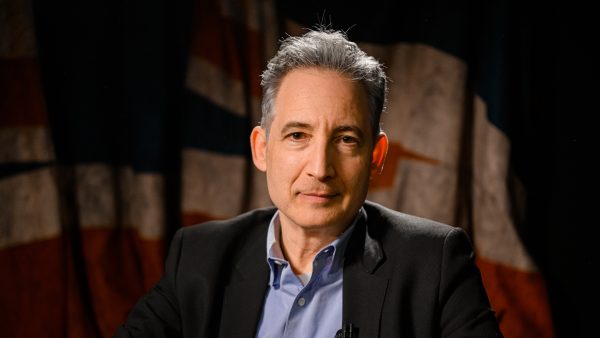
Neil deGrasse Tyson makes the case for science education and scientific literacy, and returns in 2023 with cosmic perspectives on civilisation. Brian Greene explains how to see the beauty of science in everything, from string theory to the end of time. Sean Carroll looks at quantum worlds and how spacetime emerges, and Lawrence Krauss argues for a godless universe. Astronauts Terry Virts and Chris Hadfield describe life in orbit, and Hadfield gives his view on UFOs. For the debate on unexplained craft, see UFOs & Disclosure.
Life, evolution and the human mind
Dr Jane Goodall talked about Louis Leakey, the chimpanzees of Gombe, empathy in science and her cautious hope for the planet. Richard Dawkins discusses The Selfish Gene, The God Delusion and consciousness. Steven Pinker makes the case for reason, science and humanism. Dr Philip Zimbardo, interviewed on his 85th birthday, revisited the Stanford Prison Experiment and everyday heroism. Matthew Walker warns that the shorter your sleep, the shorter your life, and Jonathan Haidt explains the coddling of the American mind. More in Human Body.
Drugs, psychedelics and the science of the brain
London Real was early to the new research on psychedelics. Professor David Nutt, former chair of the Advisory Council on the Misuse of Drugs, argues that alcohol is the most damaging drug in the world. Dr Robin Carhart-Harris explains the brain science behind psilocybin research at Imperial College London, and MAPS founder Rick Doblin makes the case for MDMA therapy. Neuroscientist Dr Carl Hart sets out to debunk drug myths, and Dr Gabor Maté argues that childhood trauma lies at the root of addiction.
Get every new episode free: watch the latest London Real interviews.
Science on London Real: common questions
Who has London Real interviewed about science? Brian Rose has interviewed Dr Jane Goodall, Neil deGrasse Tyson, Richard Dawkins, Steven Pinker, Brian Greene, Sean Carroll, Lawrence Krauss, Matthew Walker, Dr Philip Zimbardo, Chris Hadfield, Professor David Nutt and Rick Doblin, among many others.
What does this page cover? It is the hub for all of London Real’s science conversations: physics and space, evolution, psychology, sleep, drugs and the brain. For more focused pages, see the Human Body, Psychedelics and UFOs & Disclosure interviews.
Can science and religion get along? The guests disagree. Richard Dawkins and Lawrence Krauss argue that science leaves no need for God, while Brian Greene and Neil deGrasse Tyson focus on the sense of wonder that science itself can give.
Are the full science episodes free to watch? Yes. Every full-length interview on this page can be watched free on londonreal.tv.





 Chat